

Stop Asking Why
Both the Army and Pixar think the same way. Intuition, imagination and staying open to all possibilities. Plus updates for UTMB, London and Flagstaff plans.


I started a new book last week. I discovered it through a podcast. The hook had me immediately:
The human brain thinks in story.
Angus Fletcher developed narrative-based leadership and decision making training for the U.S. Army Special Operations. He advises at Disney, Sony, NASA and the BBC. This guy calls himself a “story scientist”. How cool is that. Tell me more!
It seems like Delta Force and Pixar would lie on opposite ends of the creativity spectrum but the trick here is that they don’t. They think in the same way.
They both align on a specific objective and train their team on the intuition and imagination to get there. There’s no playbook. When a situation is changing rapidly, a plan or a playbook is too narrow. New questions are being asked, there is little to no data to work with and new answers or possibilities are required. The creativity has to match the speed of situational change to imagine the possible paths forward. This is the condition for growth.
This exchange from the podcast made me chuckle because I’ve been there:
Angus Fletcher - “In business meetings they do this thing called ‘brainstorming’.
Rick Rubin - “I’ve heard of it”.
Angus - “Say something random! We’ll write it on the whiteboard. It’s business people so it’s not that random.”
Rick - “That really happens?”
Angus - “Yes! Then they remove all the things they can’t do which takes away all the low probability things and eliminates all the interesting ideas. This is why these sessions don’t work and business is so boring.”
So whether you’re making a Disney film, navigating combat or devising business strategy you need a strong intuition and imagination in order to devise new possibilities and make a plan. It says a lot about this approach that everything from the Army to largely creative organizations like Disney train on story-based thinking.
I’m straying from the narrative here but how cool is this story:
To select for Delta Force, the Army does an exercise called “The Long Walk” where they send candidates toward an objective on a map but they don’t tell them how to get there, how long it should take nor do they give them any feedback as to their progress. Sounds a bit like an ultra right? Or maybe any creative project? The purpose is to learn to do your best internally without feedback. You have to be able to self-assess. If you’re the first person doing something truly unique, nobody knows if you’re doing it right or not and you have to push forward anyway. I feel this all the time.
“When you look at real change that happens in the world it always comes from creatives because they know how to fight for what matters. Everyone in society can look around and say this or that is wrong but it’s always the creatives that say ‘we’ll fight for it’ because that creative impulse is the primordial thing that gets you moving.” - Angus Fletcher
So, bringing it back, how do we go about learning and processing new situations to better understand the possible ways forward within a new story?
In the early pages of the book Angus describes a workshop where he has people interview a partner about a situation or a story. They are allowed to ask who, what, where, when and how but NOT why. Never why. The goal of the workshop is to develop stronger intuition around what is unique about people. Not what you have in common with them but what makes them different. Avoid asking why and feed your brain more information and possibilities with who, what, where, when and how.
Why is forbidden because it prompts an answer too early. The fastest way to miss the why is to ask it directly. Angus says to take note of the moments you want to ask why because that impulse is a red flag for exceptional information. However, give yourself more time to perceive opportunities and behavior before jumping to the judgment that why enables.
When we judge people we give them labels and put them in boxes. I’ve written a lot about how strongly I dislike being made to feel this way. Applying labels or categories to people and situations is a weakness. It limits all the other possibilities required to breakthrough. Like that corporate brainstorm it eliminates all the interesting ideas.
Here’s the real meat of the story-based approach. We avoid asking why because that judgment breaks intuition. We stop wondering and imagining the possibilities once we drop a label and close up shop. The possibilities get cut off. We must resist judgement to lean as far as possible into intuition. When an artist reveals a new approach or a new view of something they are relying heavily on intuition to leave the door open to that new perspective.
So find the exceptional information. The anomaly. The beauty. Don’t exclude or eliminate it, seek it out. The questions that lead there are the ones you have never asked before. Stop templatizing and playbooking for the sake of it.
Turning this lens on the running world, this story thinking can of course apply to the day-to-day of the business world. But from a brand stand point, it describes the intuition and imagination required for world building. At this moment I can think of just a few brands that start with story and then create products that might live in that world. It’s a start and it’s working. In the future, the most memorable brands will take that approach and go further. They’ll lead a brand story that never ends but adds “and then” after every chapter. Like an old “Choose Your Own Adventure” book. It will be critical to think in possibilities and constantly ask new questions to imagine this on-going world. Intuition into how your fans interact with that world becomes critical. AI will make playbooks, templates, SOPs and old answers to old questions so available that they will have very little value. A premium will be placed on the new and the brands that create the environment for intuition, imagination and new possibilities will thrive.
From his training with Special Ops, Angus says there is no safe step in uncertainty. There’s only your step. The more you believe there’s a right answer, the less likely you are to come up with a new answer. Stop asking why and allow yourself the opportunity to discover something new.
I’m still early in this book but I’m on my fourth listen of the podcast. When I find something that really gets me thinking I just can’t stop. There’s something addictive about that feeling when all parts of my brain are firing and new areas are opening up.

SUB-FOURTEEN is Live
I spent months before, during and after Western States working with an incredible team to make a film about the men’s field and the Hoka athletes specifically. I’ve been in this game a long time and have been waiting for a year like 2026. I feel so fortunate to be able to tell the story of breaking fourteen hours. We made it fun, funny, emotional and I’m really proud of it. Hoka dropped it on Tuesday and I truly hope you enjoy it. Let me know your thoughts. It’s not easy to create a film like this given the uncertainty of races so bravo to our entire team and thank you to the athletes.
The concept leans further into a live broadcast motif by adding more angles, perspectives and soundbites, but it then pulls out of the frantic race story to deeper vignettes (or double clicks as we’ve been calling them) on each of the six Hoka male athletes at key moments during the race. That was the concept from the beginning. In May in Flagstaff we shot for various race scenarios not knowing what would happen. Of course the best scenario actually happened and we were ready for it.
As I spent more time with the athletes in the film it became apparent that the opportunity is there for Hoka to tell more stories around these athletes - not just on the Hoka channels but on the athlete channels. There are personalities, side stories, dreams and adventures surrounding each of them that would make you really love them, and the brand by association. And that’s only the men, let alone the women.
UTMB and London Trips
I will be in Chamonix all week leading up to and after UTMB. I have a couple small events planned during the week both for Auteur Sportif and MoB. If you are there and would like to connect please don’t hesitate to reach out. That especially goes to all of you outside of the US that I don’t get to see as often. If you’re from a brand and reading this I’d love to tell you what I am working on.
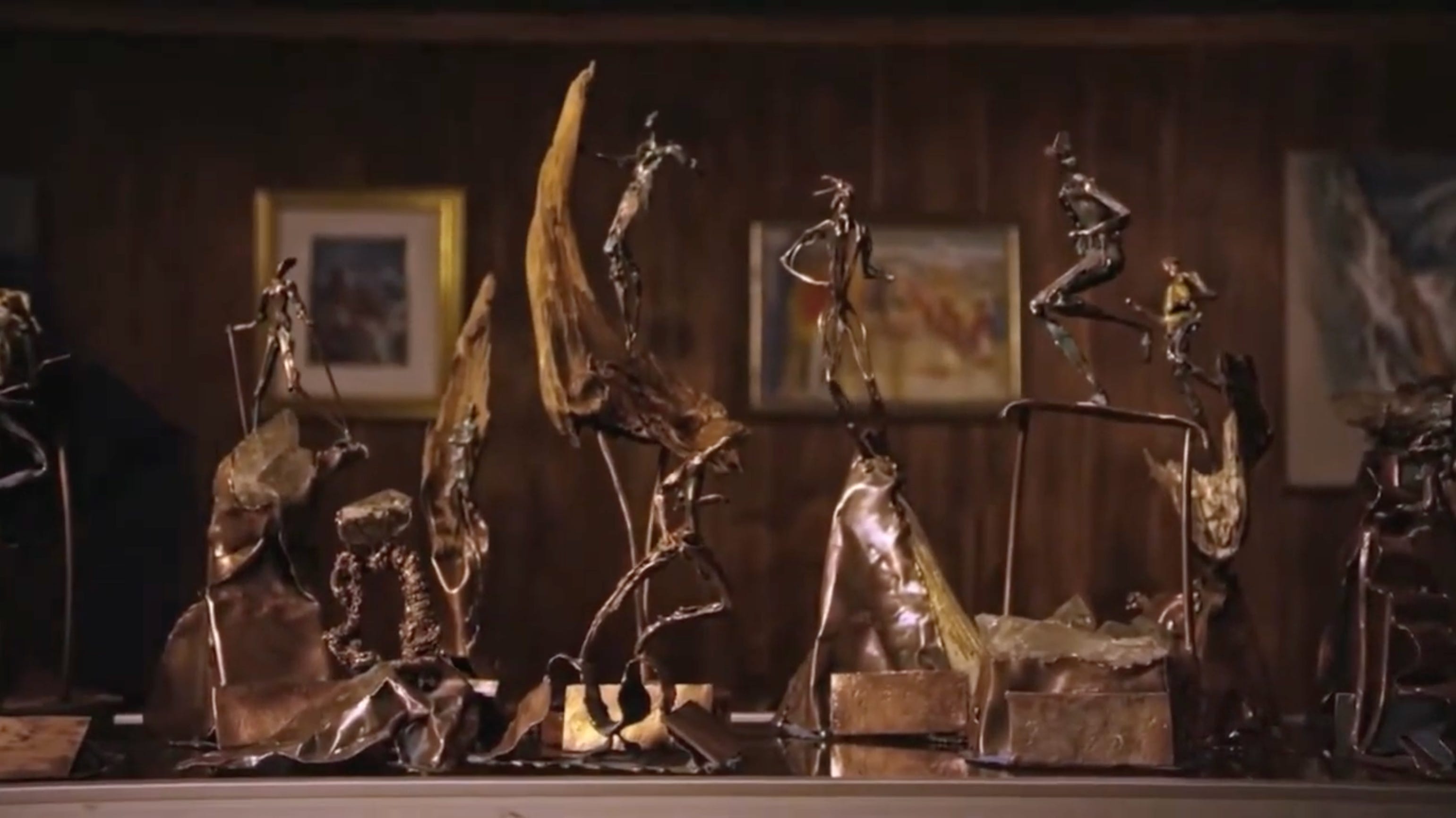
After the race I’ll be staying in Chamonix for a few days to run long and hit some epic routes. It’ll give me an opportunity to test some products and digest the firehose of activity that unfolds across UTMB week. I have some fun ideas to share things from all this. If you’ll be there let me know and let’s linkup.
After UTMB I’ll head to London for the Like the Wind Run Culture: Live event on Sept 4/5. It’s a great opportunity to connect with a London running scene that I don’t really know so please give me a shout. I want to really feel London.
Diadora Flagstaff Pop-up
I’m off to Flagstaff with the Diadora crew for their High Mileage Summer pop-up in Flagstaff. We’ve been working together for months on campaign concepts to launch a new shoe to an audience of high school and collegiate track and cross country runners. This will be the debut. We’ve shot with Marco Langon and Simeon Birnbaum and the pieces are really coming together to make it iconic while continuing to establish an ownable aesthetic for Diadora. More to come that I’ll share as it becomes public.
Thanks for reading ya’ll. More to come soon!
-Matt
The "selection" process for Delta is the core element. What I love about the Long Walk is that it is time bound, but they don't tell them the requirements. That means they have to work as hard as possible yet balance their energy/fuel to accommodate the full length of the effort. The uncertainty is the condition and the solo experience is the forge. Second Burn uses quite a few principles from Delta and other elite training in our generative model and training camps.
Incredible film!